Ueda Castle Ruins Park is one of Nagano Prefecture’s most historically significant samurai sites, a quiet castle park that tells a story of strategy, resilience, and regional pride. Rather than impressing visitors with towering keeps or dramatic reconstruction, Ueda Castle is remembered for how it functioned and what it achieved. Today, its stone walls, moats, and open grounds form a peaceful green space in the heart of Ueda City, while preserving the legacy of one of Japan’s most admired samurai families.
The origins of Ueda Castle are inseparable from the Sanada clan. The castle was built in 1583 by Sanada Masayuki, a highly skilled tactician during the turbulent Sengoku period. Positioned strategically along the Chikuma River, the site was chosen not for visual dominance but for its defensive advantages. Masayuki designed the castle to exploit terrain, waterways, and controlled access points, allowing a smaller force to withstand much larger armies. This strategy proved its worth on two historic occasions. In 1585, during the Battle of Ueda, Sanada forces successfully repelled a Tokugawa army many times their size. Fifteen years later, in 1600, the Sanada once again delayed Tokugawa troops on their way to the decisive Battle of Sekigahara. These encounters cemented Ueda Castle’s reputation as a fortress that could not be taken easily, despite its modest appearance.
Unlike famous castles such as Himeji or Matsumoto, Ueda Castle was never about grandeur. Its strength lay in carefully placed stone walls, earthen ramparts, moats, and natural waterways that restricted enemy movement and visibility. The main keep no longer stands, but the surviving foundations clearly reveal how the castle functioned as a defensive system rather than a symbol of power. Walking through the site today feels like reading a three-dimensional lesson in Sengoku-period warfare.
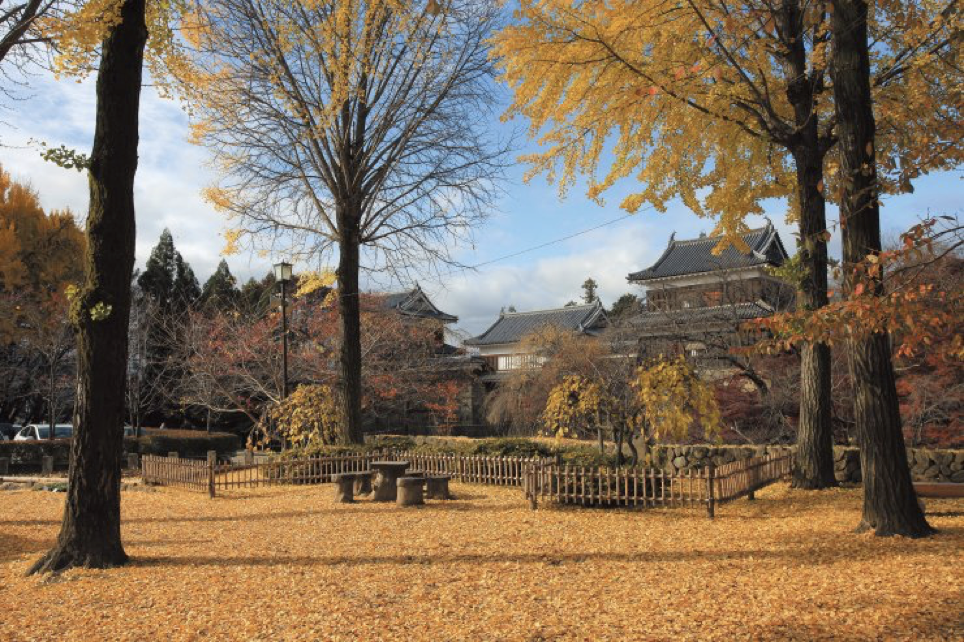
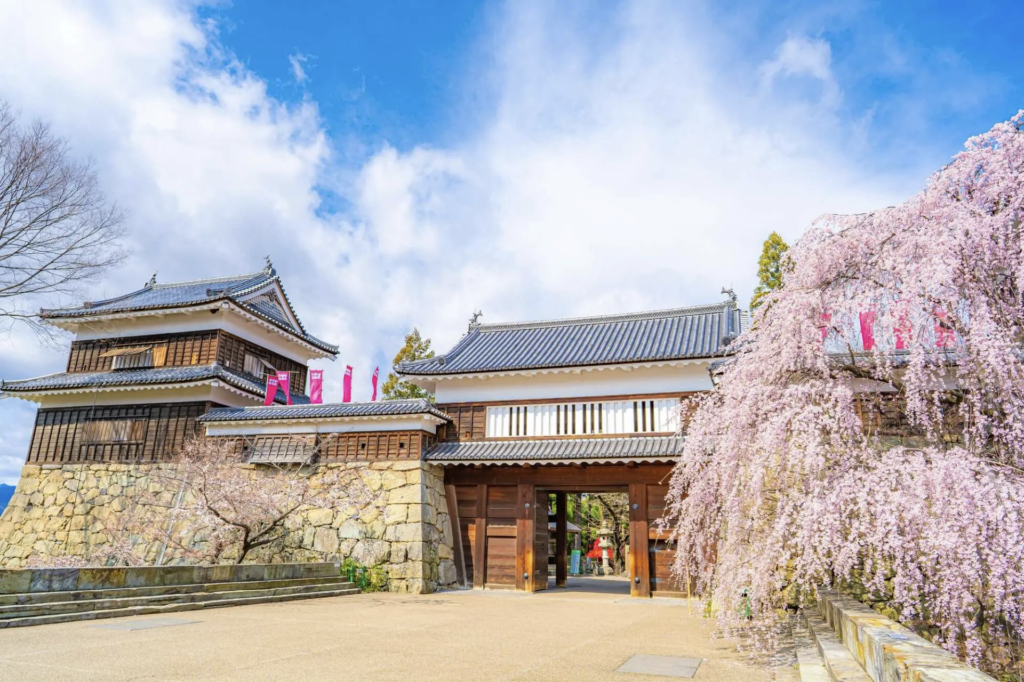
After the Meiji Restoration and the end of the feudal system, much of the castle was dismantled, as happened across Japan. In the twentieth century, however, the site was preserved and transformed into Ueda Castle Ruins Park. What was once a battlefield became a place of memory and daily life, combining reconstructed gates and watchtowers with original stone walls, moats, and wide lawns. At the heart of the park stands Sanada Shrine, dedicated to the Sanada clan and still visited by locals, history enthusiasts, and those seeking quiet reflection.
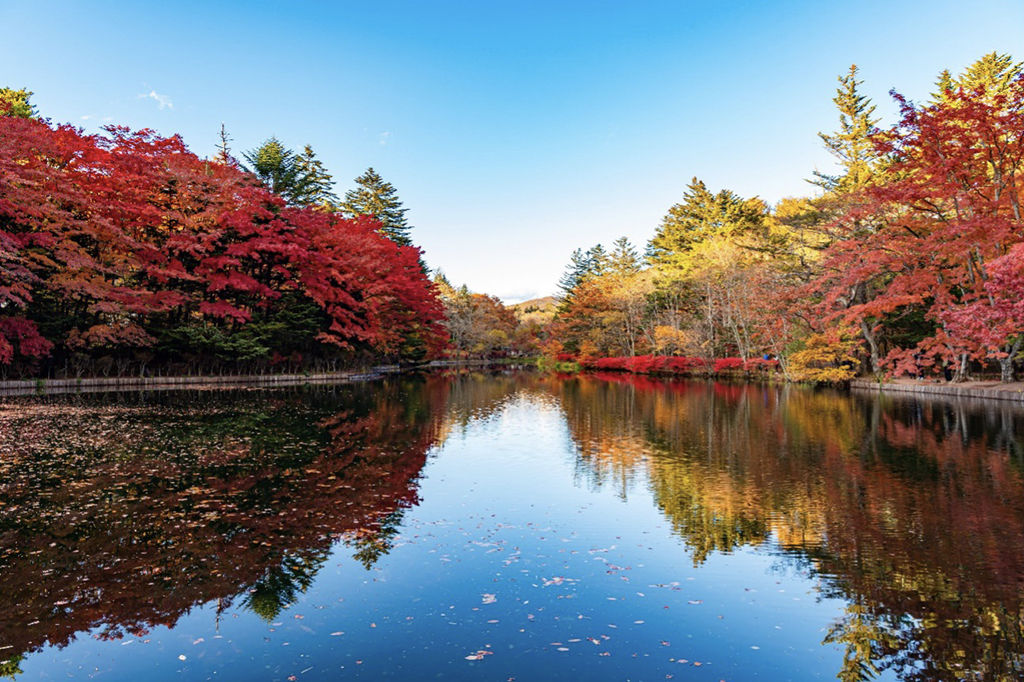
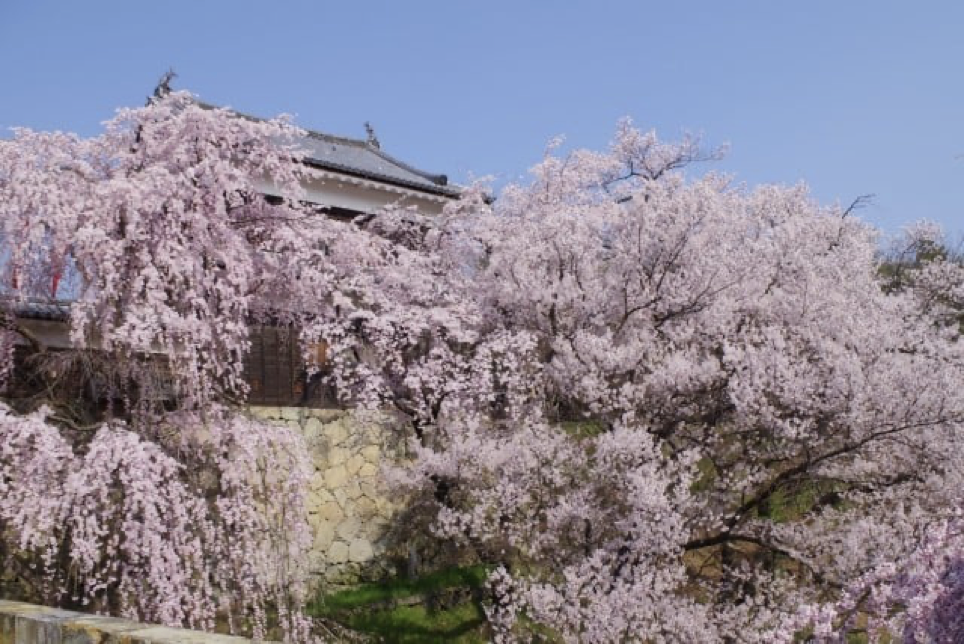
Seasonal change adds another layer to the park’s appeal. In spring, Ueda Castle Ruins Park becomes one of Nagano’s most celebrated cherry blossom spots, with hundreds of trees lining the moats and paths. Summer brings deep greenery and shaded walkways, while autumn paints the park in warm colors that contrast beautifully with dark stone walls. In winter, snow highlights the geometry of the ruins, creating a calm, almost minimalist landscape. During cherry blossom season, evening illuminations add a festive yet respectful atmosphere that draws both residents and visitors.
Today, Ueda Castle remains a powerful symbol of local identity. The Sanada clan is a continuing source of pride, celebrated through festivals, museums, and storytelling throughout the city. For visitors interested in samurai history, the site offers something different from more famous castles. It represents intelligence over brute force, regional power outside the major capitals, and the lived realities of the Sengoku era. The story here feels human and grounded, shaped by decisions made on this very land.
Visiting Ueda Castle Ruins Park is not about spectacle but understanding. As you walk its paths, you stand where strategy altered the course of battles and where a small clan influenced Japan’s future through insight and resolve. For travelers venturing beyond Karuizawa, Ueda Castle makes a rewarding day trip, combining history, seasonal beauty, and local character in a place where the samurai legacy continues quietly among trees and stone.
Ueda Castle Ruins Park, Ueda Castle history, Sanada clan, Ueda sightseeing, Nagano samurai sites, day trip from Karuizawa