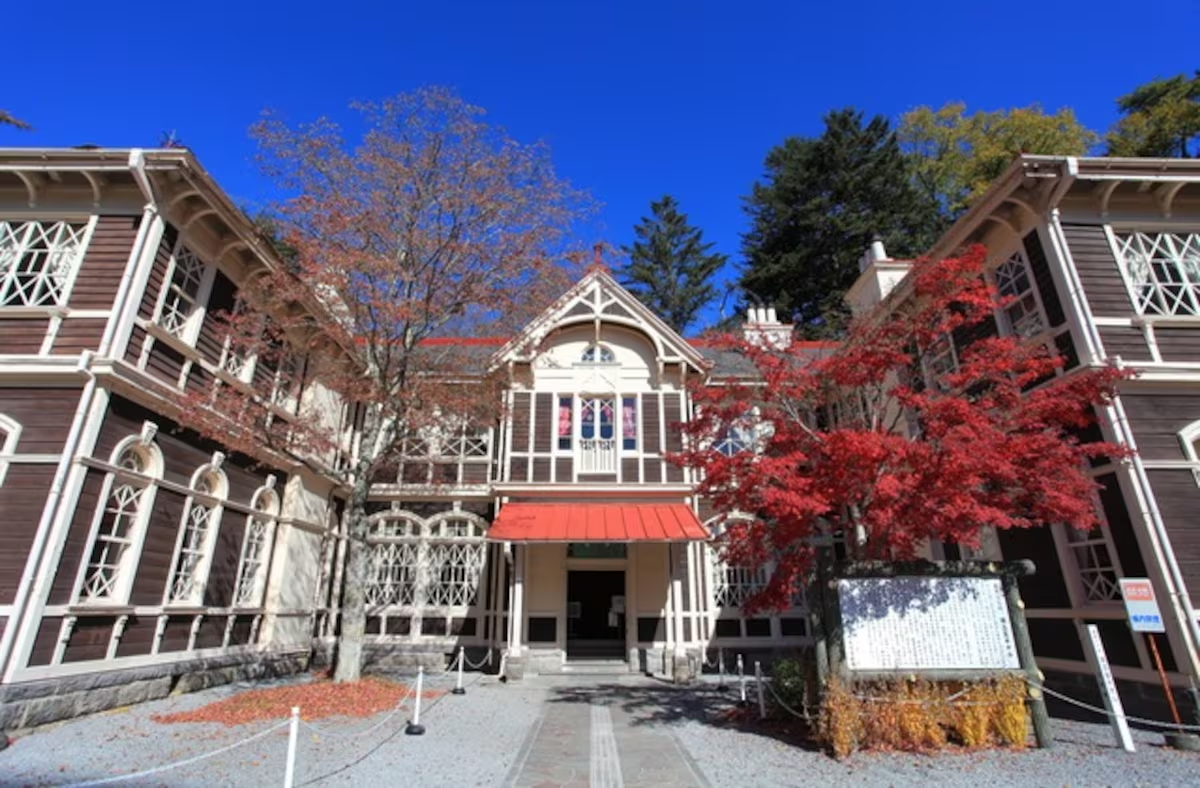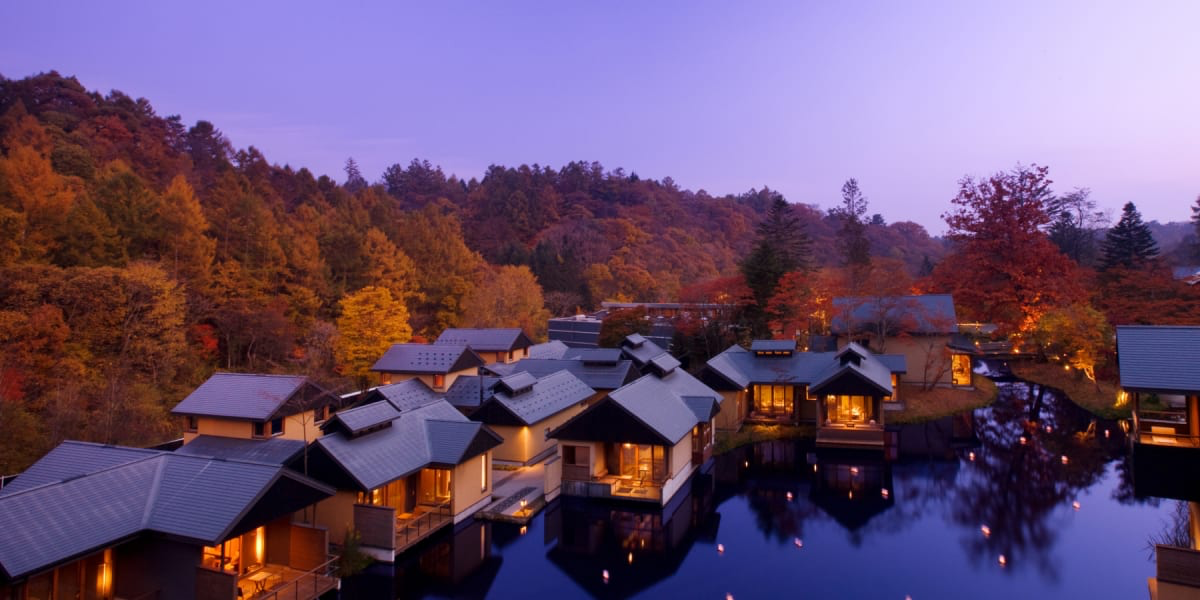
Oniooshidashi Lava Field is one of Japan’s most dramatic volcanic landscapes, a vast expanse of solidified lava born from the violent power of Mount Asama. Here, nature does not express itself gently. The terrain is raw, chaotic, and overwhelming, preserving a moment when the earth itself seemed to break apart. Located on the slopes of Mount Asama near the Nagano–Gunma border, Oniooshidashi allows visitors to walk directly across ground shaped by one of the most destructive volcanic eruptions in Japanese history.
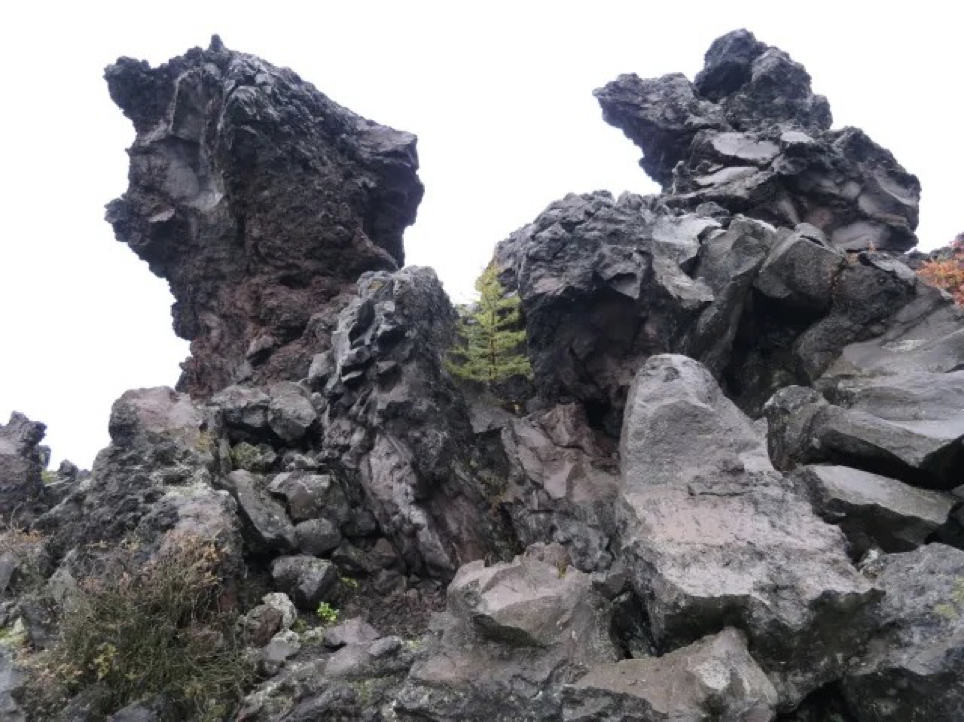
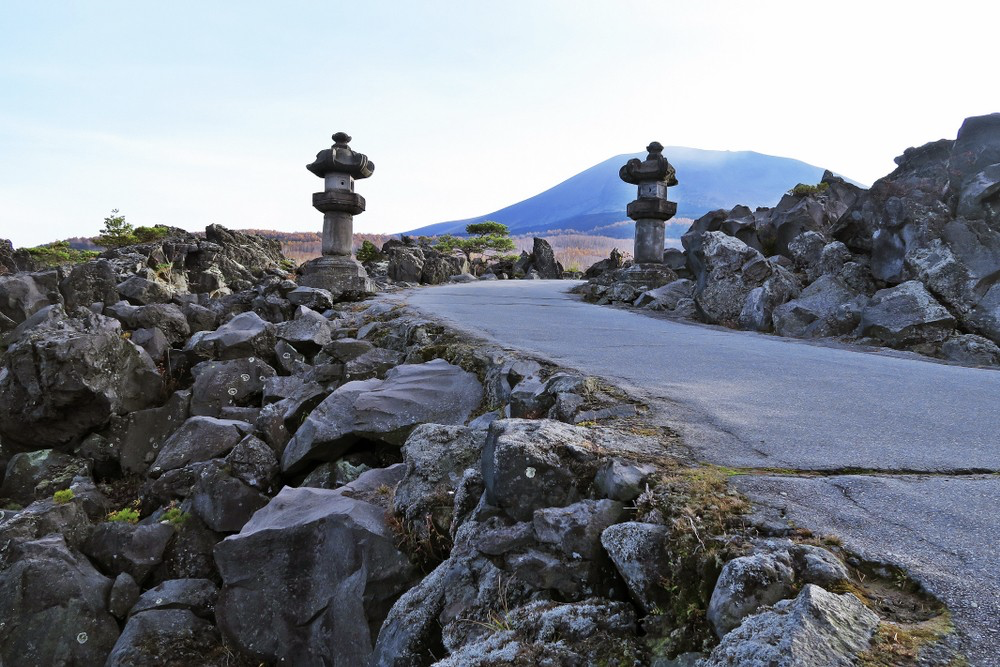
The lava field was formed during the Tenmei Eruption of 1783, a catastrophic event that unfolded over several months during the Edo period. Mount Asama released enormous lava flows, volcanic bombs, and thick ash clouds that destroyed villages, buried farmland, and triggered widespread famine across central Japan. The eruption permanently altered the region’s geography. The lava that poured down the mountainside cooled rapidly and violently, solidifying into jagged black formations unlike the smoother lava plains found elsewhere. These sharp, twisted shapes give the impression that the earth was torn open and frozen mid-motion.
The name Oniooshidashi literally translates as “where demons were pushed out.” According to local legend, the eruption forced demons out of Mount Asama through divine intervention, leaving behind this fearsome landscape. This imagery reflects how people of the Edo period understood natural disasters through spiritual and mythological frameworks rather than scientific explanation. The lava field was seen not only as a place of destruction, but also as a sacred sign that demanded reverence and humility.
From a geological perspective, Oniooshidashi is an exceptionally well-preserved example of a large-scale basaltic-andesitic lava flow. Jagged lava spines, pressure ridges, frozen channels, and volcanic bombs embedded in hardened rock are clearly visible throughout the field. Over time, mosses, grasses, and resilient alpine plants began to take hold in cracks and crevices, demonstrating nature’s slow but persistent ability to reclaim even the harshest environments.
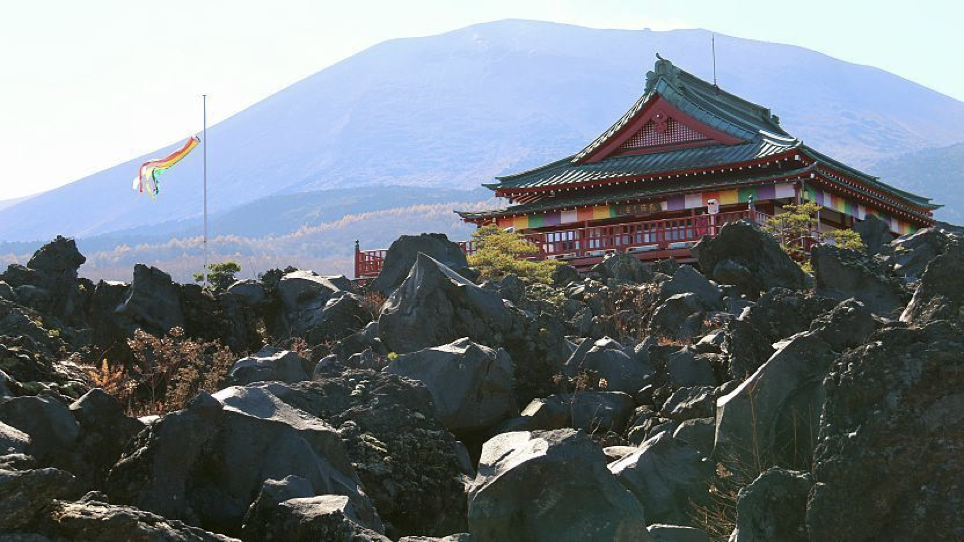
Amid this stark terrain stands Oniooshidashi Kannon Temple, built to pray for the souls of those who perished during the Tenmei eruption. The presence of a Buddhist temple within such a hostile landscape reflects a uniquely Japanese response to disaster: remembrance of the dead, acceptance of nature’s power, and a search for spiritual balance rather than control. From the temple grounds, visitors face the lava field and Mount Asama directly, creating a powerful moment of reflection on impermanence and resilience.
Despite its dramatic appearance, Oniooshidashi is surprisingly accessible. Carefully designed walking paths and boardwalks guide visitors safely across the uneven lava while preserving the field’s raw character. Short loop routes are suitable for all ages and require no technical hiking skills. With few trees to block the view, the landscape feels vast and exposed, and even brief walks convey a sense of scale that photographs struggle to capture. Sky, stone, and silence dominate the experience.
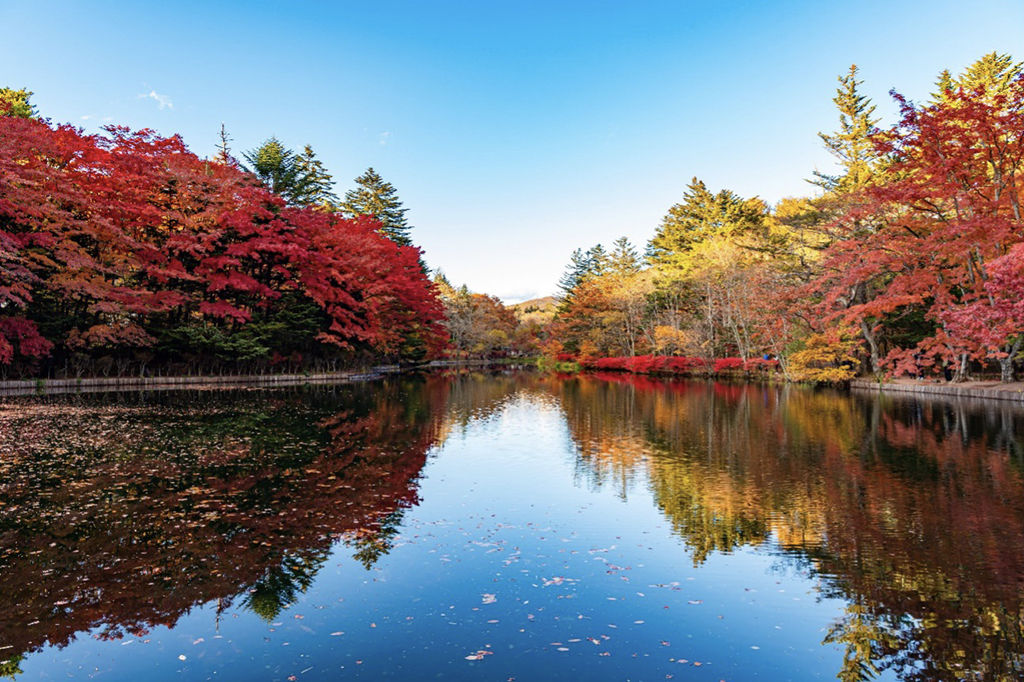
The character of the lava field changes with the seasons. In spring, sparse greenery highlights the contrast between life and blackened stone. Summer brings intense sunlight and shimmering heat, emphasizing the severity of the terrain. Autumn is especially striking, as red and gold foliage punctuates the dark lava and creates one of the region’s most photogenic scenes. In winter, snow settles into cracks and hollows, softening the landscape into surreal, sculptural forms. Autumn and early winter often offer the clearest views of Mount Asama.
Today, Oniooshidashi also serves an educational role. It functions as a natural laboratory for volcanology and a site where visitors can learn how eruptions occur and how lava landscapes are formed. Informational displays explain volcanic processes in clear, accessible language, deepening understanding without diminishing the emotional impact of standing on the remnants of a real disaster.
A visit typically takes between one and one and a half hours and is easily reached by car or bus from Karuizawa. Comfortable walking shoes are recommended, and because the area is highly exposed, weather conditions such as strong sun, wind, or cold should be taken into account. Many travelers combine the visit with nearby Mount Asama viewpoints, Shiraito Waterfall, Usui Pass, or a return to Karuizawa town.
Oniooshidashi Lava Field is more than a sightseeing destination. It is a frozen moment of geological violence preserved in stone, telling a story of destruction, belief, survival, and renewal. For visitors to Karuizawa, it reveals the untamed force beneath the town’s calm and refinement and explains why Mount Asama has long inspired both fear and reverence. Experiencing Oniooshidashi adds depth to any journey through the region, offering a powerful encounter with Japan’s living geology.
Oniooshidashi Lava Field, Mount Asama eruption, Tenmei eruption 1783, Asama volcano lava field, Karuizawa volcano, Oniooshidashi Kannon, things to do near Karuizawa