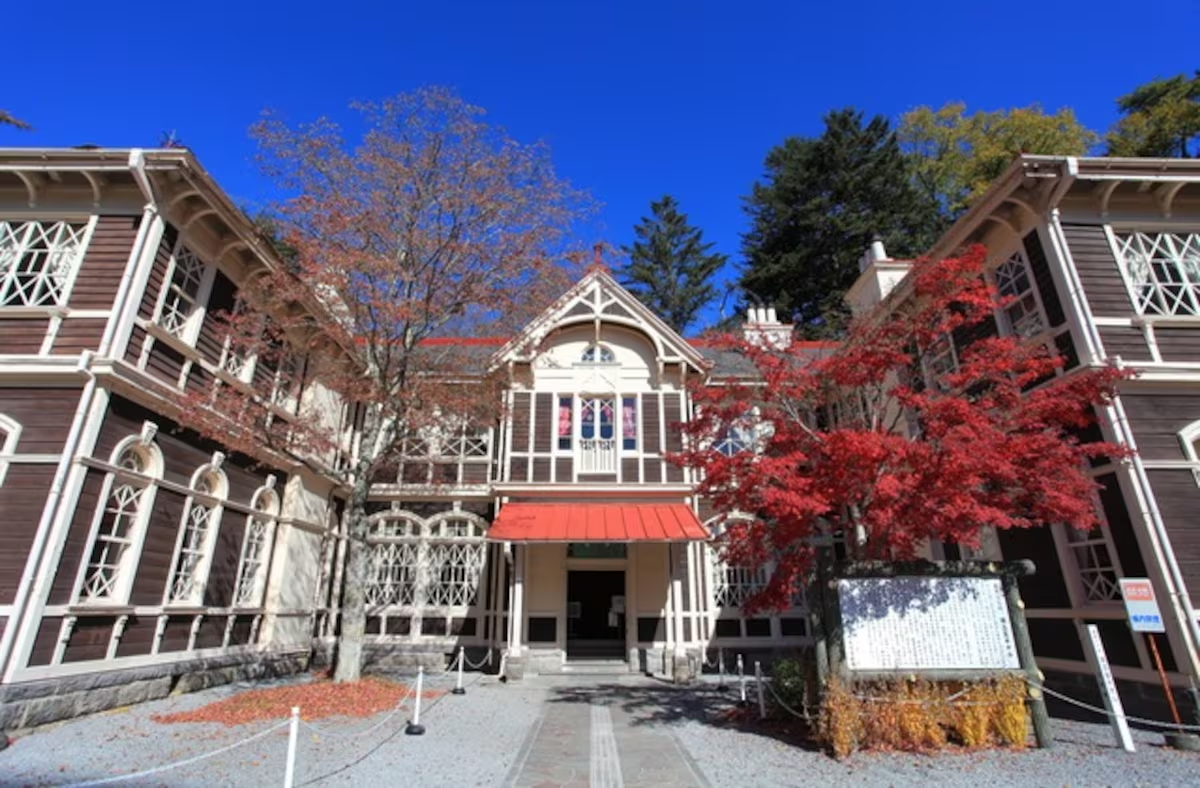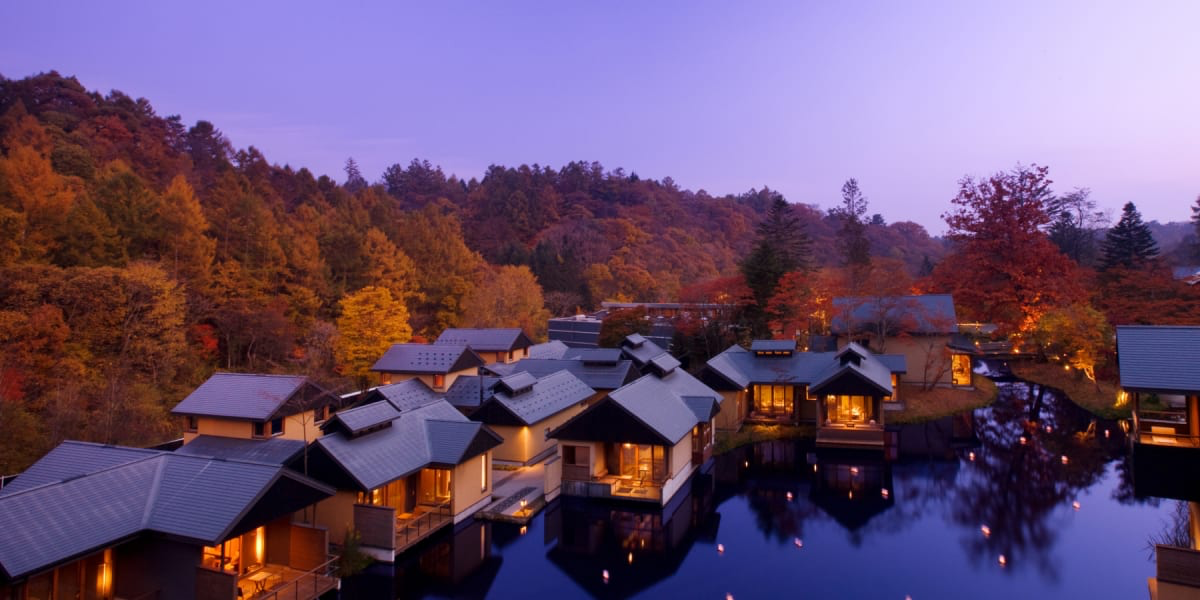
Komoro Castle Ruins, known today as Kaikoen, is one of Japan’s most unusual and atmospheric castle sites. Instead of rising above the surrounding town, the castle was built downward into a river terrace, creating what is often described as a “castle below the ground.” Located in Komoro City, a short journey from Karuizawa, the site preserves a powerful sense of Sengoku-period strategy, mountain defense, and seasonal beauty. Rather than reconstructed towers or imposing keeps, Komoro Castle is experienced through stone walls, earthworks, and landscape, allowing visitors to encounter history exactly where it once unfolded.
The origins of Komoro Castle date back to the late fifteenth century, during the turbulent Sengoku period. Its importance lay in its strategic position along the Nakasendō, the inland highway that connected Edo, present-day Tokyo, with Kyoto. Control of Komoro meant control over mountain routes through Shinshu, the movement of trade and troops between eastern and central Japan, and access to fertile plains below Mount Asama. Instead of building a fortress high above the land, the castle was carved into a plateau overlooking the Chikuma River, a highly unusual design choice that reflected both ingenuity and restraint.
Komoro Castle is especially famous for its ana-jō structure, a term that refers to castles built downward rather than upward. Deep moats were cut directly into volcanic rock, while tall stone walls rose from below the castle grounds, creating a dramatic vertical defense. Narrow access points limited enemy movement, and natural cliffs and riverbanks were incorporated as barriers. This design made the castle extremely difficult to attack, particularly from below, and was ideally suited to the rugged terrain of Nagano.
Like nearby Ueda Castle, Komoro Castle was closely associated with the Sanada clan, renowned masters of mountain warfare and defensive strategy. Leaders such as Sanada Masayuki understood that in Nagano, geography mattered more than grandeur and endurance mattered more than intimidation. Komoro Castle embodies this philosophy, appearing subtle rather than imposing, yet resilient and deeply strategic in its use of the land.
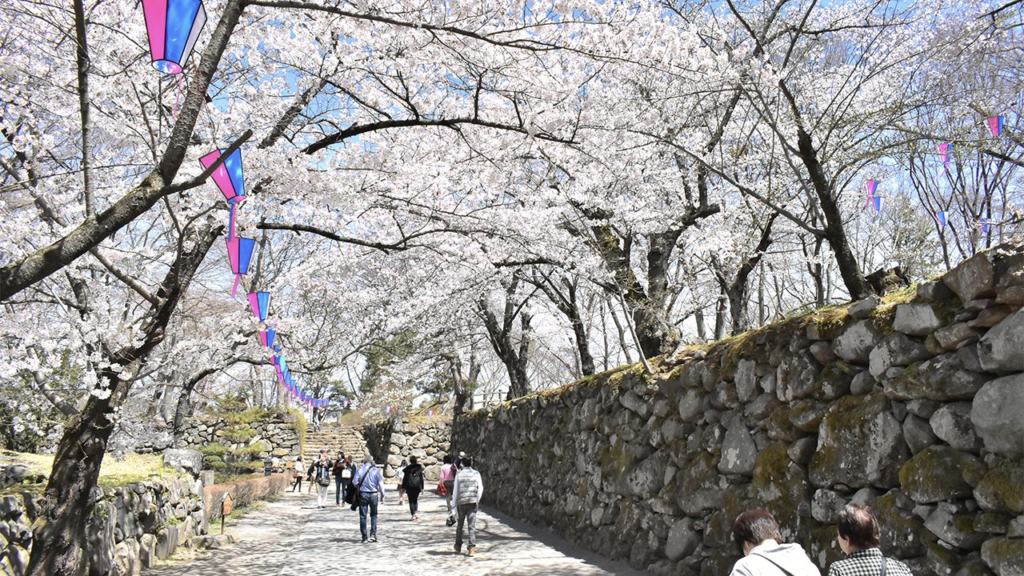
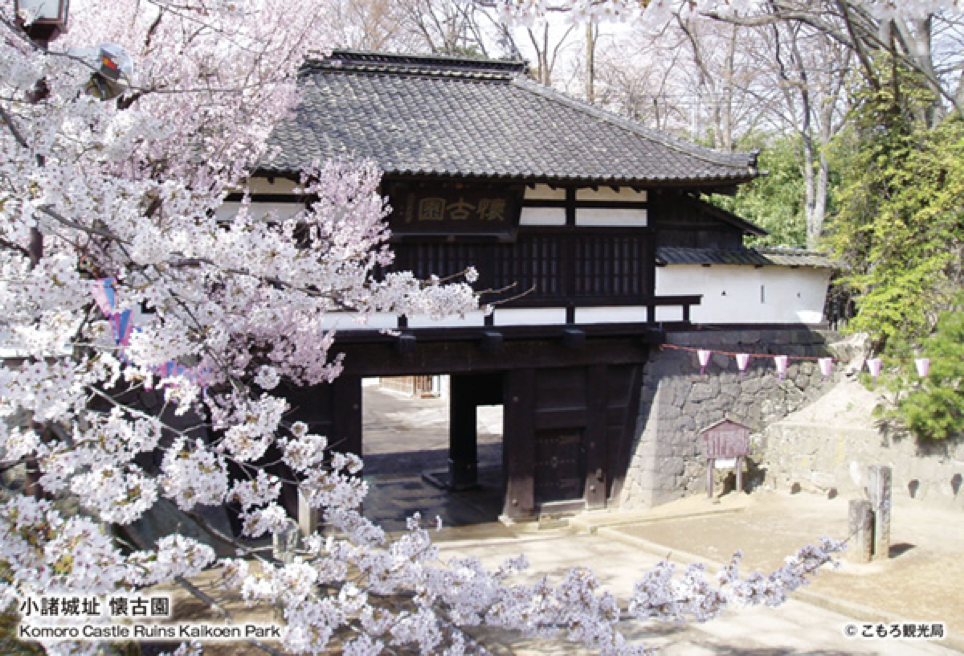
Following the Meiji Restoration and the abolition of the feudal system, Komoro Castle was dismantled. Rather than disappearing entirely, the site was preserved as Kaikoen, a name that means “Garden of Nostalgia.” Today, the park retains its historic stone walls and gates, along with open lawns, walking paths, and small museums housed within surviving structures. Kaikoen blends memory and leisure, allowing visitors to walk through layers of history without the distraction of modern reconstruction.
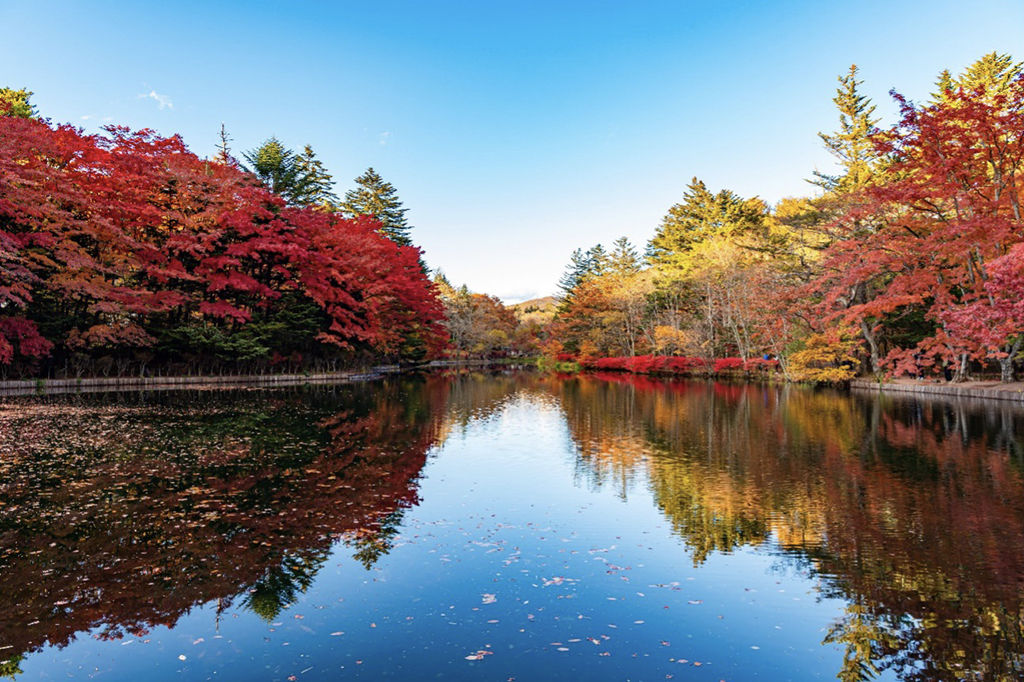
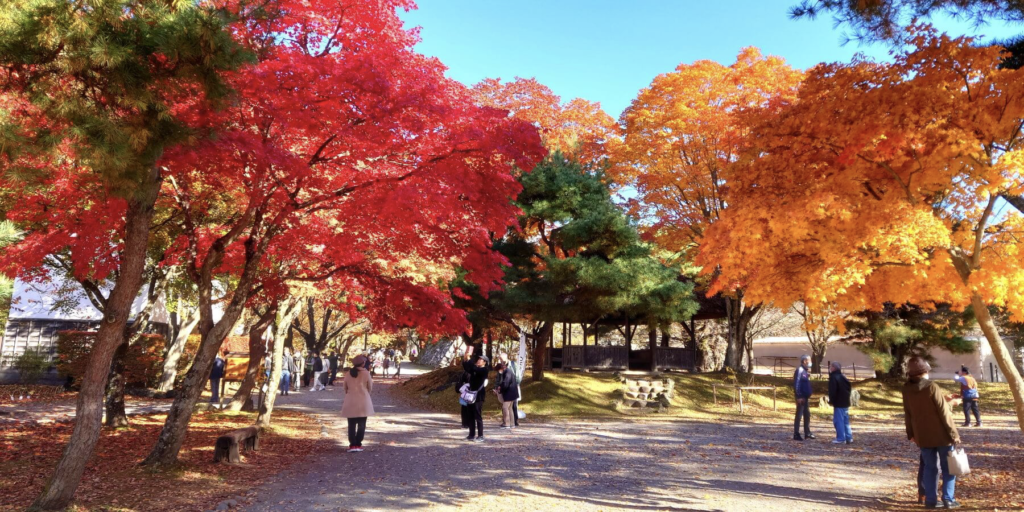
The ruins are especially loved for their seasonal atmosphere. In spring, cherry blossoms line the moats, making Kaikoen one of Nagano’s most celebrated hanami spots. Summer brings deep green shade and cool air, while autumn frames the dark stone walls with brilliant foliage. In winter, snow highlights the dramatic verticality of the walls and earthworks, emphasizing the castle’s unique downward design. Although spring and autumn are the most popular seasons, early mornings offer quiet beauty throughout the year.
Today, Komoro Castle is valued not as a spectacle but as a place of memory. It represents the practical realities of Sengoku-era warfare, the adaptation of architecture to demanding landscapes, and a quieter side of samurai history far from Japan’s major capitals. For travelers exploring Karuizawa and central Nagano, Komoro offers a meaningful contrast to rebuilt castles elsewhere, grounding history in the land itself.
Visiting Komoro Castle Ruins is an invitation to experience a story that only Nagano can tell, one in which mountains dictate strategy and humility replaces display. Walking through Kaikoen, visitors descend into history, surrounded by stone walls that once guarded vital routes through central Japan. It is a place where samurai history feels human, strategic, and inseparable from the landscape, making Komoro Castle Ruins one of the most rewarding historical stops near Karuizawa.
Komoro Castle Ruins, Kaikoen Park, Komoro Castle history, Nagano samurai sites, Komoro sightseeing, day trip from Karuizawa.