Stone Church (Uchimura Kanzō Memorial) is one of the most extraordinary landmarks in Karuizawa, celebrated not only for its striking architecture but also for the profound philosophy embedded in its design. Located in the tranquil Hoshino Area, the church stands apart from conventional religious buildings, offering an immersive space where faith, nature, and modern thought merge seamlessly.
The church is dedicated to Uchimura Kanzō (1861–1930), one of Japan’s most influential Christian intellectuals. Uchimura was the founder of the Nonchurch Movement, known in Japanese as Mukyōkai, which rejected formal church institutions, clerical hierarchy, and rigid religious rituals. He believed that faith should be deeply personal rather than institutional, that Christianity must coexist naturally with Japanese culture and ethics, and that spiritual truth could be discovered through conscience, study, and an intimate relationship with nature. Karuizawa, long associated with quiet reflection and intellectual retreat, was closely linked to Uchimura’s thought, making it a fitting location for a memorial inspired by his ideas.
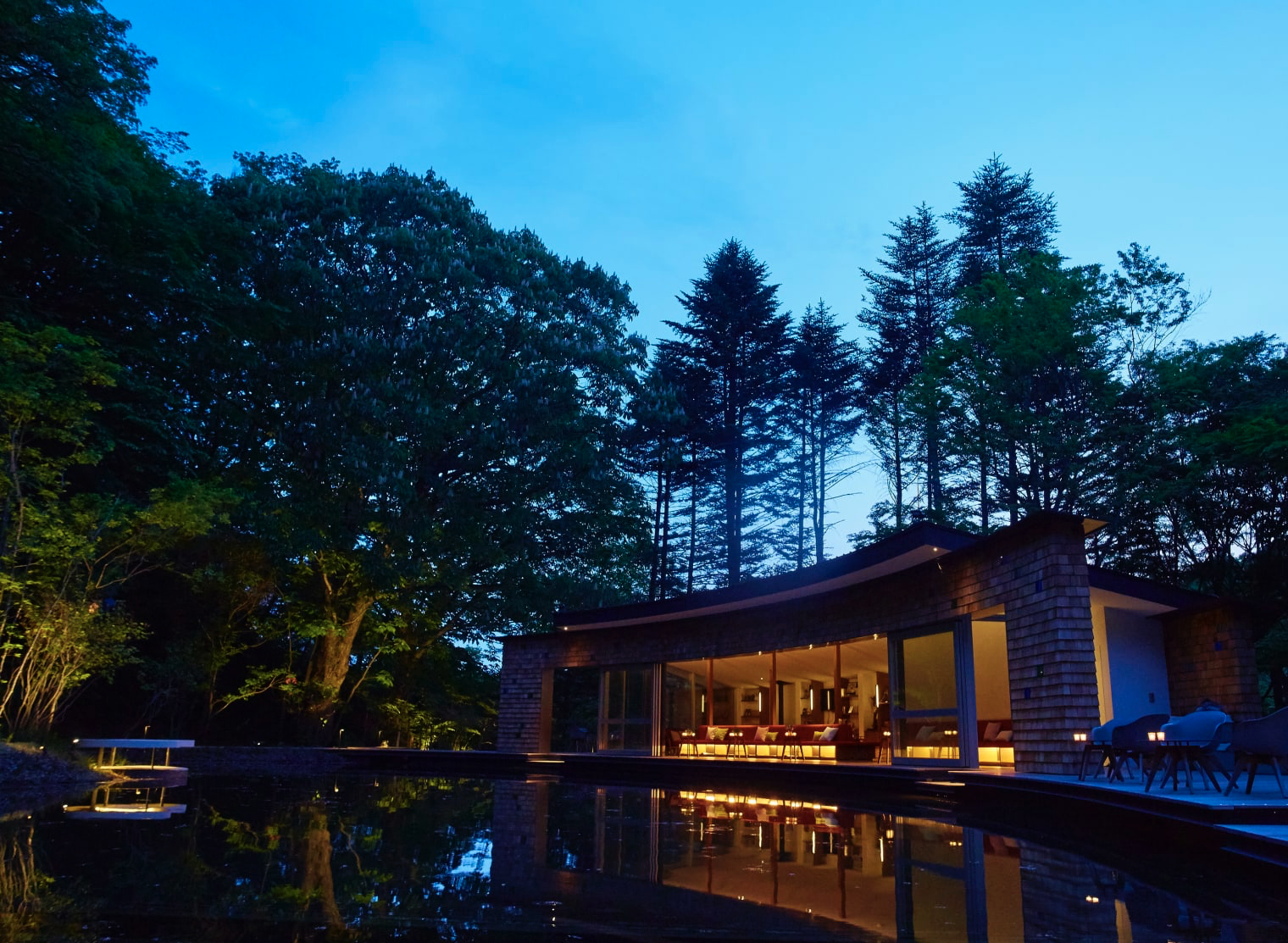
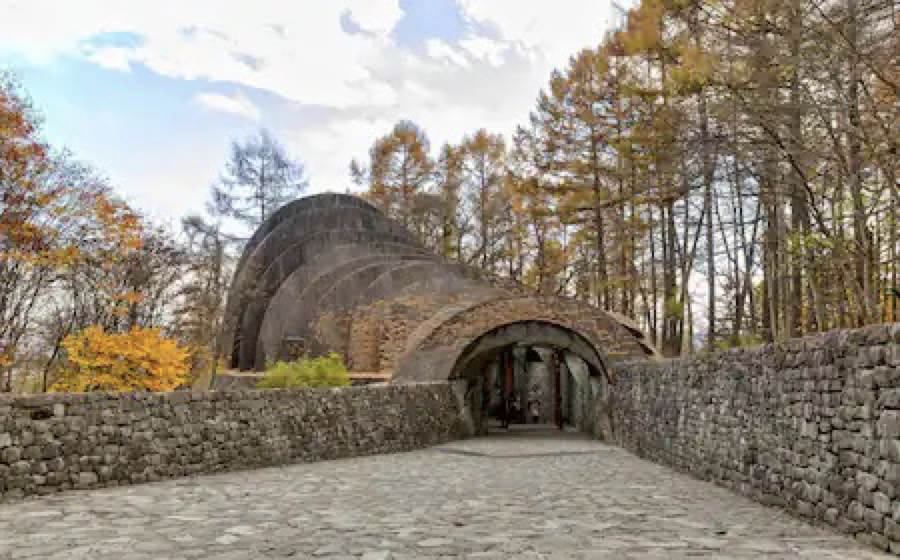
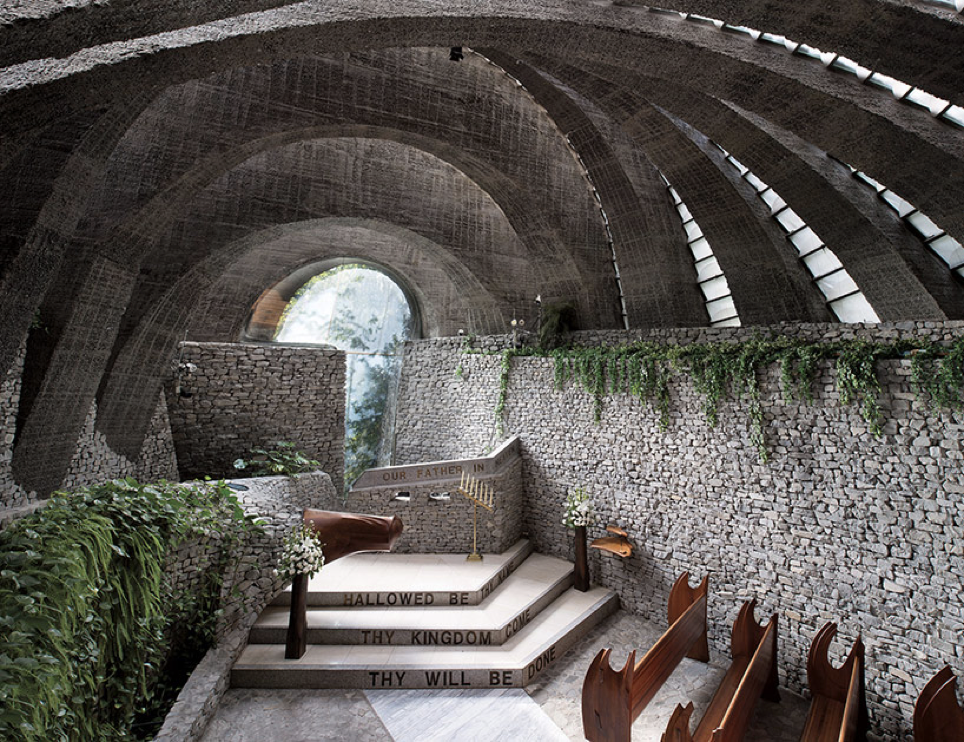
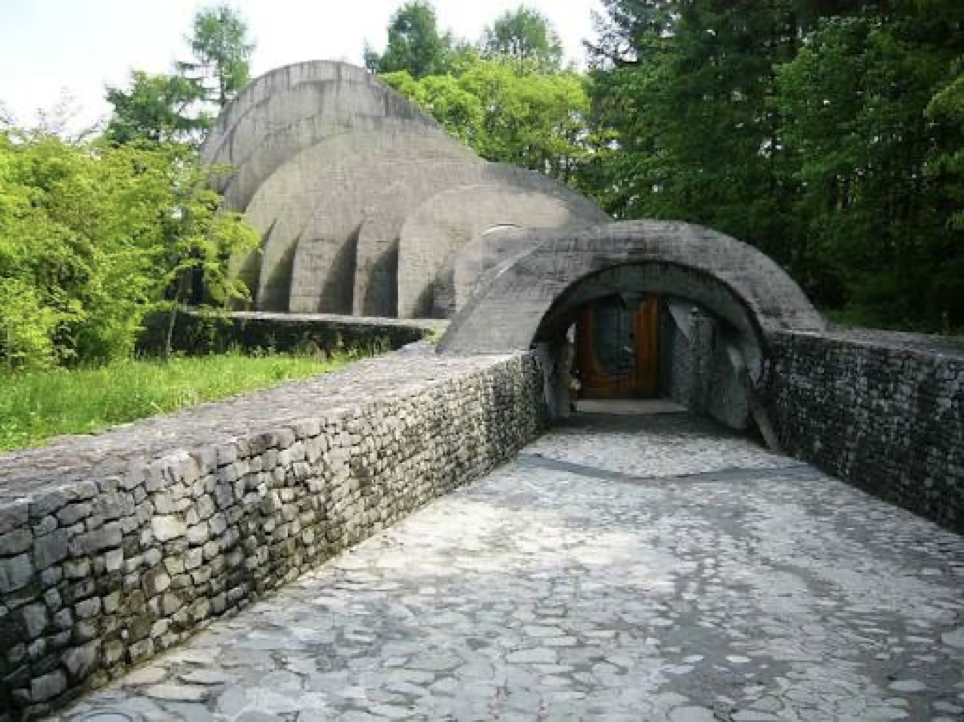
Stone Church was completed in 1988 and designed by American architect Kendrick Bangs Kellogg, a former student of Frank Lloyd Wright. Kellogg’s design philosophy closely mirrors Uchimura’s worldview. Rather than imposing a building onto the landscape, the structure appears to grow out of it. Curving stone walls resemble a cave or mountain passage, while layers of glass and open space allow sunlight, wind, and even rain to enter freely. The result is a space that feels less like a constructed church and more like a natural sanctuary shaped by the earth itself. Kellogg described the concept as architecture emerging from nature, an idea perfectly aligned with Uchimura’s rejection of rigid religious authority.
Inside, the church feels alive and constantly changing. Light moves across stone and glass throughout the day, while the subtle sounds of wind and rain become part of the experience. Stone, wood, and steel exist without sharp boundaries, creating a fluid environment that encourages quiet contemplation. There are no dominant religious icons; instead, the architecture itself becomes the focal point. This intentional absence reflects Uchimura’s belief that faith arises from personal experience rather than prescribed doctrine, allowing each visitor to engage with the space in their own way.
The Stone Church has gained international recognition as a masterpiece of organic architecture and one of Japan’s most unique spiritual spaces. It is frequently featured in architectural publications and is regarded as one of the most important examples of late twentieth-century religious architecture in Japan. Beyond its architectural significance, it has also come to symbolize modern Japanese Christian thought, expressed not through sermons or symbols but through form, light, and silence.
Today, the Stone Church is widely known as one of Japan’s most sought-after wedding venues, attracting couples from across the country. This contemporary role aligns naturally with its philosophical origins. The emphasis on individual commitment, inner reflection, and harmony between people and nature resonates strongly with wedding ceremonies focused on personal vows rather than formal religious ritual. In this way, the building continues to evolve while remaining faithful to its original intent.
The church remains part of the Hoshino Resorts Karuizawa complex and is carefully maintained as both a sacred and cultural space. Access to the interior may be limited depending on weddings and events, but visitors can always appreciate the exterior and surrounding forest paths. Even from the outside, the building communicates its quiet power and deep connection to the landscape.
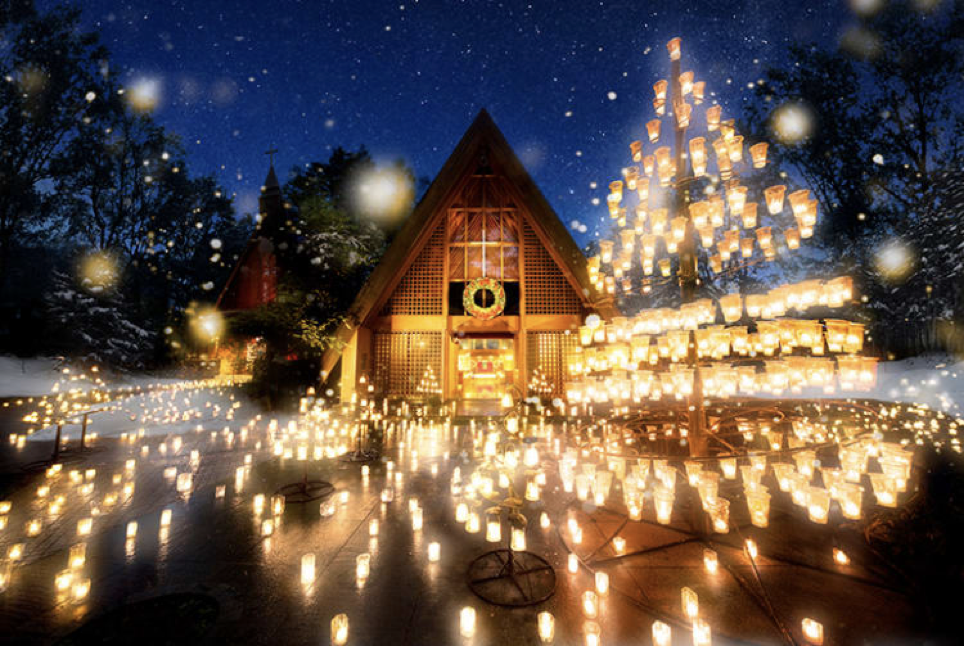
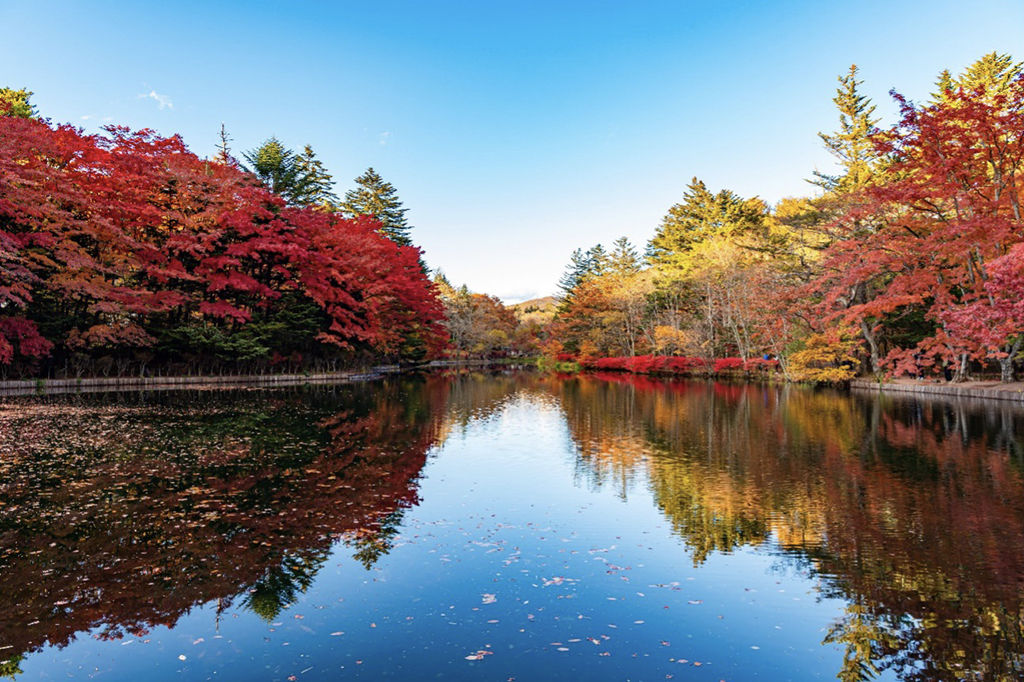
Each season transforms the Stone Church in a distinctive way. Spring brings soft light and fresh greenery that enhance the interplay of stone and glass. Summer offers cool forest air and deep shadows, while autumn is especially dramatic, with vivid foliage reflected in the curved glass surfaces. In winter, snow turns the church into a silent, contemplative sanctuary reminiscent of a natural cave. Early morning and late afternoon provide the most atmospheric light and are ideal times to visit.
Stone Church is not simply a place of worship; it is a three-dimensional expression of philosophy. It embodies Uchimura Kanzō’s vision of faith without walls, hierarchy, or separation from nature. For visitors interested in architecture, spirituality, philosophy, or modern Japanese history, the Stone Church offers one of the most profound and unforgettable experiences in Karuizawa—quiet, powerful, and deeply moving.
Stone Church Karuizawa, Uchimura Kanzō Memorial, Karuizawa architecture, Kendrick Bangs Kellogg, Karuizawa churches, Hoshino Area sightseeing